
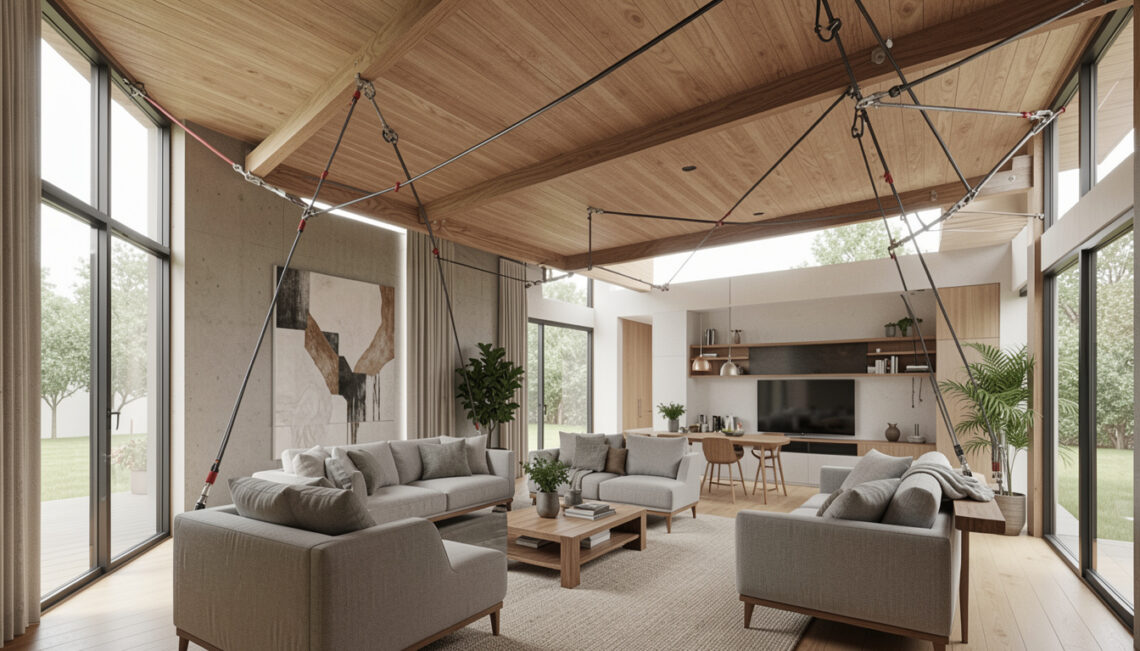
How Rigging Helps Create Open Concept Living Spaces
Ever walked into a home and felt like the whole main floor just breathes? No cramped hallways, no awkward little doorways chopping up the kitchen from the living room, just one big, beautiful flow from one end to the other. That open-concept feeling doesn’t happen by accident. Behind almost every one of those dramatic living spaces is a wall that used to be there, a beam that had to go up in its place, and a crew that used serious rigging equipment to make it all happen safely.
Most people picture rigging and think of construction sites or shipping yards. But rigging is one of the unsung heroes of home renovation, especially when you’re knocking down load-bearing walls to open things up. If you’ve ever wondered how contractors move enormous steel beams into place without the ceiling caving in on everyone, this is your answer.
Why Open Concept Renovations Need Rigging in the First Place
When a wall is purely decorative, taking it out is pretty simple. But a huge chunk of the walls people want removed are actually supporting the floor above them, or even the roof. Removing one of these means the weight has to go somewhere else, usually into a large support beam, often steel or engineered wood, that spans the new open space.
That beam must be lifted into position, perfectly leveled, and secured while the rest of the structure is temporarily supported. This is heavy, unforgiving work. A single steel I-beam for a home renovation can weigh several hundred pounds or more, and there’s no room for it to slip, swing, or drop while it’s being set. That’s exactly where proper rigging tools come in.
Below-the-Hook Equipment: The Real MVP
Below-the-hook equipment refers to any device attached beneath the hook of a crane or hoist that grabs, cradles, or supports the load. Think of it as everything between the lifting machine and the object being lifted. For beam installations in open-concept remodels, this includes items such as spreader bars, lifting slings, and custom rigging plates that distribute weight evenly across a beam to prevent bending or twisting during the lift.
Without solid below-the-hook equipment, even a small crew with a mini crane could end up with a beam swinging unpredictably, a nightmare in a finished home where floors, cabinets, and furniture are within inches of the action.
Rigging Hooks: Small Part, Massive Responsibility
Rigging hooks might look like simple hardware, but they’re one of the most critical links in the chain, literally. These hooks connect chains or slings to the load and to the lifting equipment. A quality rigging hook has a safety latch to prevent the load from slipping off unexpectedly, and it’s rated for a specific working load limit that crews always respect.
In a renovation setting, rigging hooks are used constantly, from hoisting beams through a window opening to pulling old framing material from a tight space. They’re not glamorous, but a worn or mismatched hook is one of the fastest ways a project can go sideways.
Turnbuckles: Fine-Tuning the Tension
Turnbuckles are adjustable connectors that let a crew take up slack or add tension to a cable or rod with just a few twists. During an open-concept renovation, turnbuckles often show up when temporary shoring or bracing needs to be tightened just right to keep a section of the house stable while the old wall comes down and the new beam goes in.
They’re also handy for fine-tuning the alignment of a support post or for keeping a temporary wall perfectly plumb while the crew works around it. Small adjustments matter a lot when you’re dealing with structural elements, and turnbuckles give contractors that precise control.
Other Equipment That Rounds Out the Toolkit
Beyond those three, a typical open-concept remodel might involve chain hoists to lift beams into place slowly and steadily, wire rope slings for wrapping around awkwardly shaped materials, shackles to connect different pieces of rigging hardware, and load binders to keep everything cinched tight during transport or positioning. Temporary shoring jacks are also common, holding up the ceiling while the permanent beam is installed underneath.
Each piece plays its part, and none of them work well on their own. A rigging hook is only as good as the sling it’s paired with, and a turnbuckle is only useful if the shoring it’s tensioning is properly set up in the first place.
The Payoff: A Space That Feels Bigger and Brighter
Once that beam is in place and the temporary supports come down, the transformation is almost hard to believe. Sightlines open across the entire main floor. Natural light bounces from window to window instead of getting trapped in a single room. Families end up with a kitchen, dining, and living area that all feel like one connected space rather than three separate boxes.
None of that would be possible without careful rigging work behind the scenes. It’s not the part of a renovation that ends up in the highlight reel photos, but it’s absolutely the reason those photos look the way they do.
How Rigging Ties Your Open Concept Project Together
If you’re planning an open-concept renovation, it’s worth asking your contractor how they plan to handle the structural aspects, including what rigging equipment they’ll use for the beam installation. A crew that takes their below-the-hook equipment, rigging hooks, and turnbuckles seriously is a crew that takes your home’s safety seriously, too. And that peace of mind is just as valuable as the gorgeous open space you’re about to enjoy.

Editorial Team
Hi, I’m Asif, the creator of Lifeline Homestyle! Passionate about home design, DIY projects, and stylish living, I share practical tips and creative ideas to help you transform your home into a cozy, functional, and beautiful space. Whether you’re looking for renovation hacks or home decor inspiration, you’ve come to the right place


You May Also Like

AI-Designed Homes: How Artificial Intelligence Is Changing the Way We Build and Decorate

Top 20 Modern Home Design Trends for 2025
